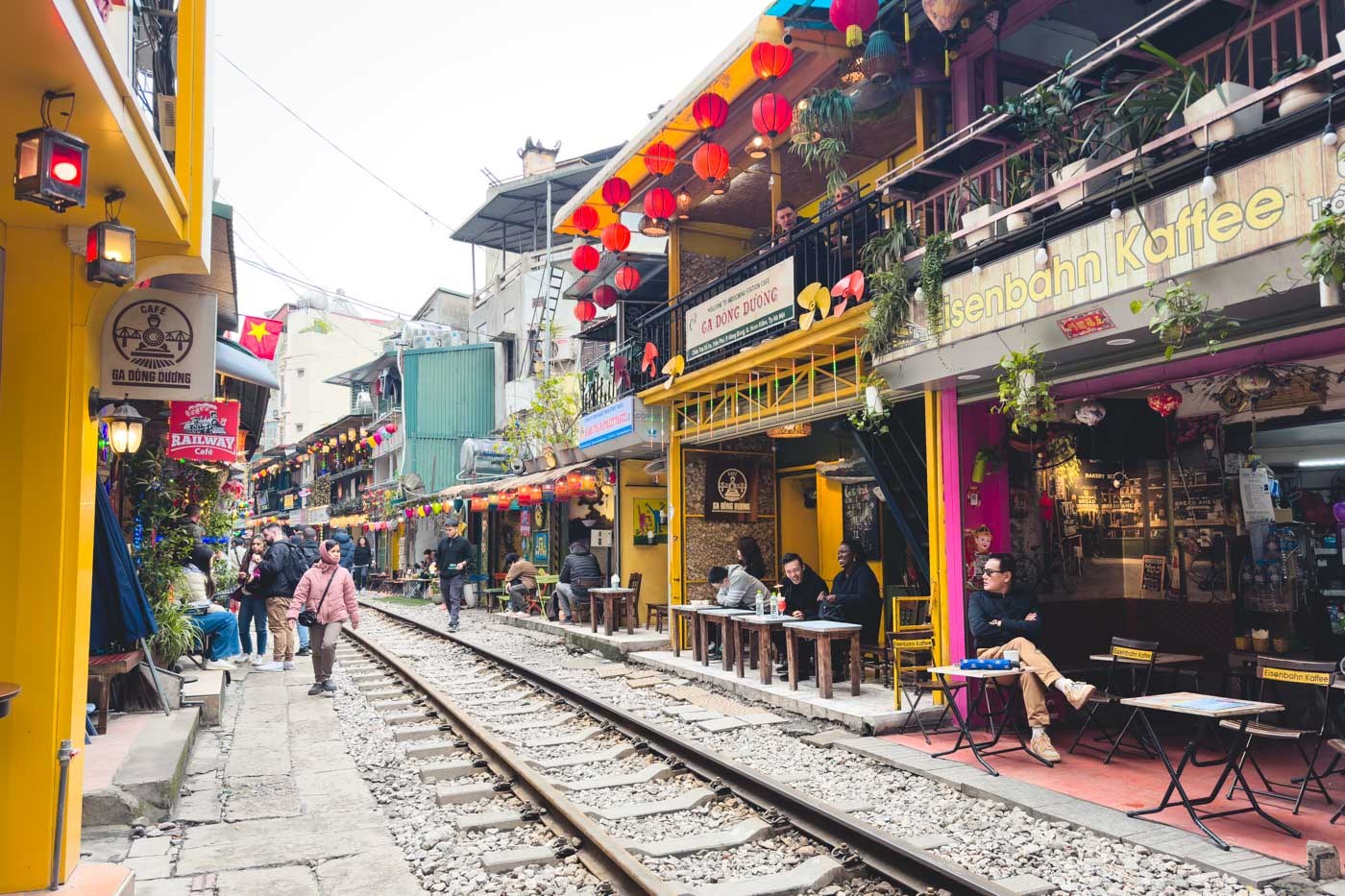
A working railway line, shoulder-width buildings on both sides, cafés perched literally on the tracks — Hanoi’s “Train Street” is the city’s most photographed street and its most misunderstood. The line runs south of the Old Quarter core, close enough to La Siesta Classic Ma May for a casual walk, and the experience — espresso on a stool as a freight train inches past a metre away — is Hanoi compressed into one sense-overload hour. This guide covers where to stand, when to go, and the etiquette that keeps the street welcoming. 🚂
📍 The Geography: Which Street, Exactly
The famous stretch runs along Phùng Hưng street and the lanes off it (Old Quarter south-west), where the railway squeeze between the houses is narrowest and the coffee houses line the rails. From 94 Ma May it is a pleasant walk through the Quarter’s backstreets — or a five-minute ride-hail if the weather argues (the Old Quarter navigation guide covers the lane logic). The cultural sites guide folds the train street into a wider heritage day.
☕ The Coffee Houses on the Rails
The cafés here are the attraction’s half-hidden genius: narrow stools, balconies built toward the tracks, and owners who have turned train-watching into hospitality. Pick a café, order the egg coffee or a strong iced black, climb the stools, and wait — the train is the entertainment, the coffee is the excuse. Prices run café-normal; the view is the premium.
🚦 The Schedule Logic (and Why You Should Not Gamble)
Passenger and freight services pass at set times on selected days — but schedules shift, and enforcement of access rules has tightened in recent years, with authorities occasionally closing the lanes to casual visitors and regulating café seating. The honest playbook:
- Ask your café host — the owners know that day’s passing times better than any app or blog; they will not seat you against a passing train.
- Go with flexibility — the street rewards the patient; combine the wait with the neighbourhood’s other stops (the street food tour route passes nearby).
- Respect the barriers — when access is restricted or a café’s seating is off the rails, take the instruction gracefully; the view from the legal side is the same.
- Morning and late afternoon — the classic light hours; midday serves the train with fewer crowds on weekdays.
📏 The Etiquette: What Keeps the Street Open
- The train has right of way — always; when staff signal, move fully inside the café’s marked area.
- Buy the coffee — the stools are the café’s, not the street’s; a drink per seat is the local contract.
- Ask before portraits — residents live here; the lens earns its frame with a nod.
- No drone stunts on the tracks — the street’s future depends on visitors behaving like guests.
🍜 Folding It Into the Day
The train street pairs naturally with its neighbours: the Dong Xuan market and Long Bien bridge loop to the north, the egg-coffee legacy cafés in the Quarter’s core, and the evening arc through the weekend night market. A practical half-day: market in the morning, lunch on the grills, train street coffee mid-afternoon, Red Bean dinner back home.
📜 The Street’s Backstory
The railway lane predates the cafés by a century: the line once hauled freight through the city’s southern edge while families built their homes a metre from the rails — the housing density that created the world-famous squeeze. Today’s scene is the result of that history meeting Instagram: the cafés opened to watch the trains, the photographers followed, and the city learned to manage its most viral street. Reading that arc changes how you see it — not a stunt, but a living street adapting. The neighbourhood’s deeper layers — the temples, the markets, the lanes — sit around it (the heritage guide and the market circuit). 📜
❓ Frequently Asked Questions
Is Train Street still open to visitors?
Access rules have tightened — some periods allow café visits with seated service, others restrict the rails’ edge; check the current status with your café host or the hotel concierge on the day.
How far is Train Street from La Siesta Classic Ma May?
Walkable — a short trip through the Old Quarter’s south-west lanes or a five-minute ride-hail; the navigation guide maps it.
When does the train actually pass?
Times shift — the café owners track that day’s real schedule; ask rather than trust fixed online times.
Is it safe with children?
With seated café viewing and respectful distance, yes — the family guide rates it a supervised high-interest stop, not a rails-edge adventure.
🚂 The Bottom Line
Train Street is Hanoi’s dare and its charm in one lane: a working railway dressed as a café strip. Go flexible, buy the coffee, respect the rails — and keep the concierge’s current-rules briefing before you go. ☕