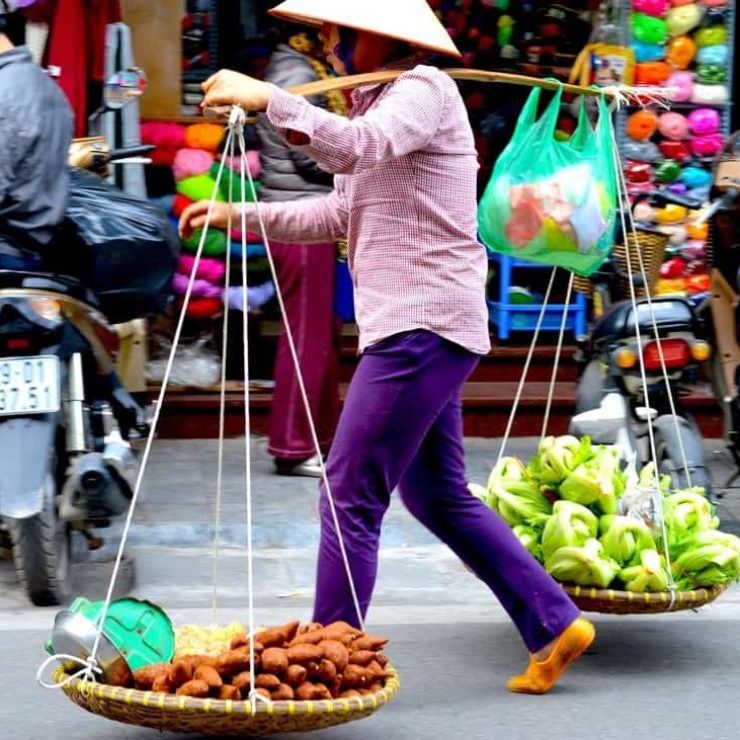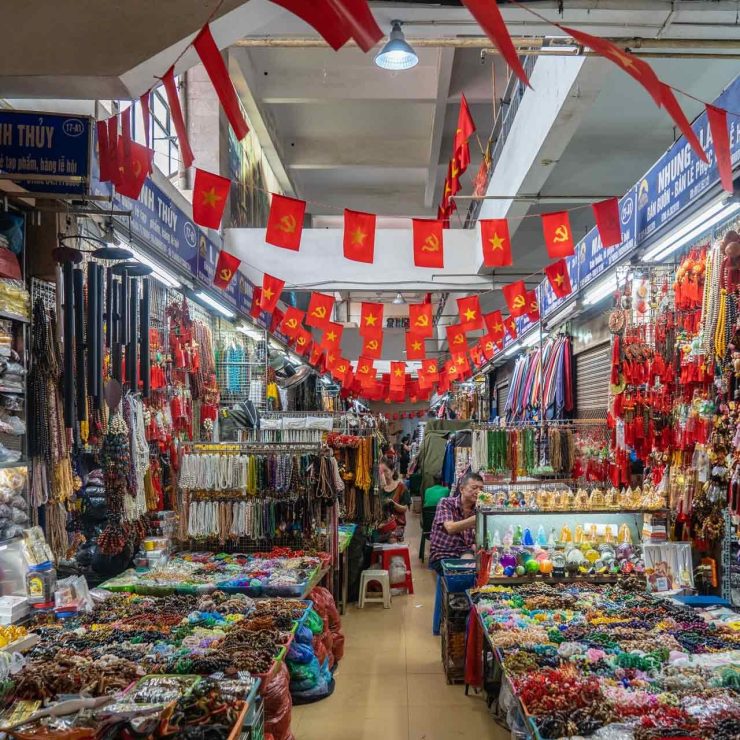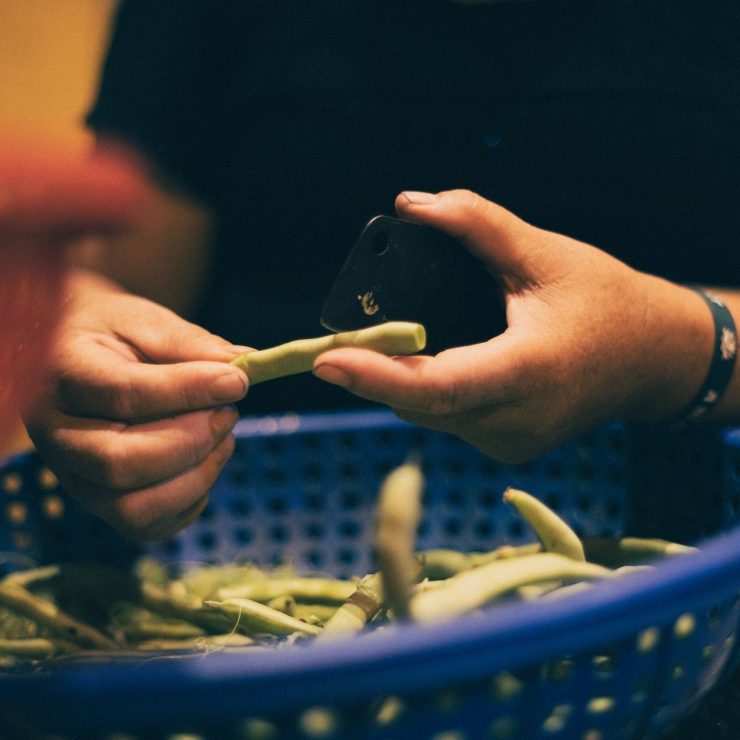
Hanoi eats its own city — every lane of the Old Quarter has a dish that belongs to it, and the meals are the trip’s most reliable pleasure. From 94 Ma May, the canon is within a fifteen-minute radius: phở stalls at dawn, bún chả smoke at noon, the fish-and-dill classics, and the sweet finishes. This guide is the dish-by-dish map for the first three days. 🍲
🌅 Breakfast: Phở, the Morning Ritual
Phở — beef broth clarified for hours, flat rice noodles, herbs — is Hanoi’s breakfast, eaten on low stools before 09:00. The first-timer’s notes:
- The stall logic — locals queue where the pot steams and the menu is one dish; the Ma May street guide names the neighbourhood institutions.
- The order — phở bò (beef) with your choice of cuts; say “tái” for rare slices, “chín” for well-done.
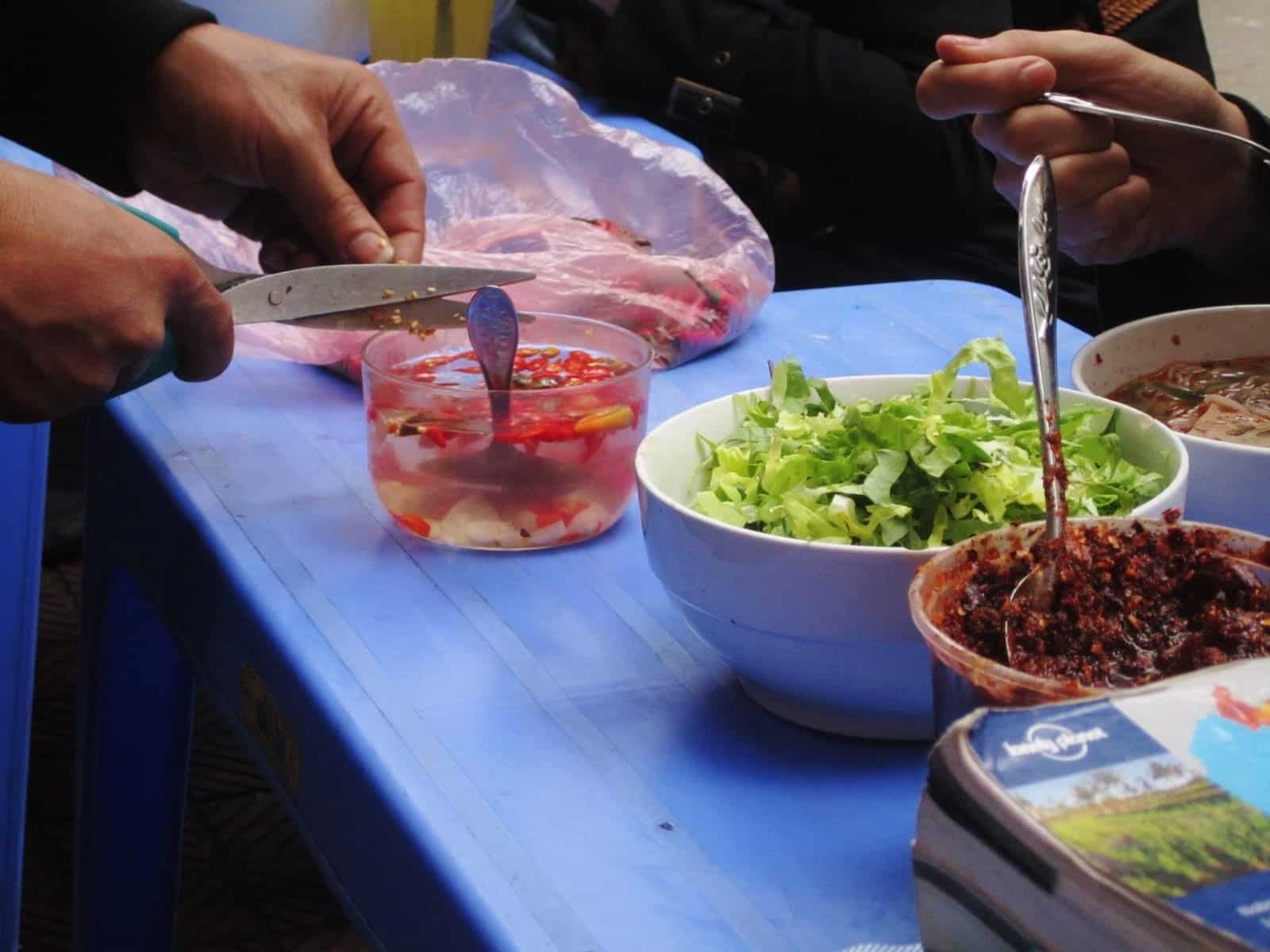
- The table kit — chilli vinegar, garlic vinegar; go easy until you know your tolerance.
- The hotel alternative — the hotel kitchen serves a proper breakfast; the street bowl is for the second morning, when the city has been introduced.
🍽️ Lunch: Bún Chả and the Smoke Circuit
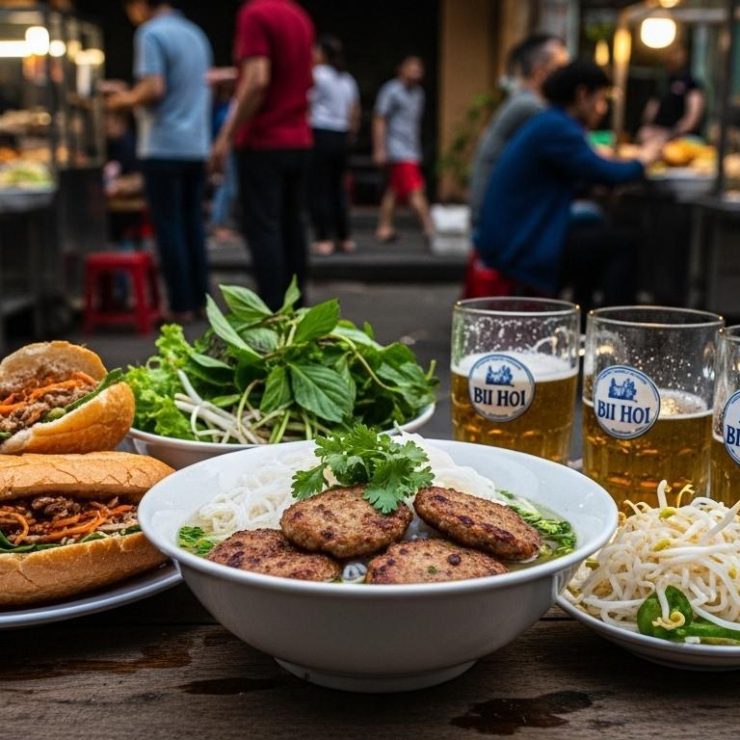
Bún chả — grilled pork over charcoal with vermicelli, herbs and the sweet-sour dipping bowl — is Hanoi’s lunch crown (the dish that made the city argue with Saigon). The smoky lunchtime strips around the Quarter run the grills from 11:00; follow the smoke, sit low, build the bowl your way. Round the lunch circuit with bánh cuốn (steamed rice rolls) and the fried-fish-and-dill classic chả cá that Hanoi cooks at the table.
🌆 Dinner and the Snacking Hours
- Chả cá Lã Vọng style — turmeric fish, dill, peanuts, cooked at your table; the dish the Old Quarter made famous.
- Nem rán / spring rolls — the fried starter that disappears first.
- The sit-down dinner — Red Bean Ma May for the refined northern table (the hotel’s own room).
- The evening graze — weekends, the night market converts Hàng Đào into a snack highway; weeknights, the self-guided food tour runs the route.
🥤 The Drinks That Bracket Meals
Egg coffee for the afternoon (the full story: egg coffee guide), fresh sugarcane juice from the carts, and the strong iced black that Hanoi drinks all day. Fruit stalls close the evening — mango, dragon fruit, the little bananas worth the trip alone.
🧭 The Three-Day Food Arc
| Day | Breakfast | Lunch | Dinner |
|---|---|---|---|
| Day 1 | Hotel breakfast | Bún chả smoke circuit | Red Bean Ma May (introduction, refined) |
| Day 2 | Street phở (the stall guide) | Chả cá table-grill | Sky bar + the night market graze (weekends) |
| Day 3 | Bánh cuốn + egg coffee | その self-guided food tour | The dish you missed, at the stall that looked happiest |
🛡️ First-Timer’s Stomach Rules
- Follow the locals — the queue is the hygiene certificate.
- Busy and fresh beats quiet and varied — one-dish stalls turn stock daily.
- Build up gradually — raw herbs are everywhere and safe at busy stalls; ramp your way in.
- Hand sanitiser, small notes — the two constants of the stool economy (money tips: the insider guide).
- When in doubt, cooked and hot — the grill-and-broth stalls are the safe deep end.
🥖 The Bánh Mì Appendix
The sandwich deserves its own line in the curriculum: Hanoi’s bánh mì runs lighter and crispier than Saigon’s — the baguette thinner, the pâté modest, the pickles sharper. The carts that assemble in front of you (patê, thịt, đồ chua, the chilli question) make the best five-minute breakfast after the phở morning, and the variations — the omelette bánh mì, the meatball version — map the city’s regional banter. Eat it walking, as designed, with the egg coffee as the course that follows. 🥖
❓ Frequently Asked Questions
Where is the best phở near the hotel?
The Quarter’s morning institutions are minutes from 94 Ma May — the street guide names them, and the concierge updates by the season.
Is street food safe?
At busy, high-turnover stalls — yes, overwhelmingly; the stomach rules above cover the caution layer.
How much should meals cost?
Street meals run pocket-change to modest; sit-down local restaurants are moderate; the refined tier (Red Bean) is the splurge — budget accordingly (the souvenir guide covers the shopping budget).
Can vegetarians eat well here?
Yes — the Buddhist chay restaurants and the vegetable-forward noodle dishes; say “ăn chay” and the stalls route you (the 料理教室のご案内 is the vegetarian-friendly deep dive).
🍲 The Bottom Line
Hanoi’s Old Quarter is a three-day eating curriculum: phở at dawn, bún chả smoke at noon, chả cá at the table, egg coffee for dessert. Stay at 94 Ma May and every dish is a ten-minute walk — the city’s best classroom runs on broth. 🥢