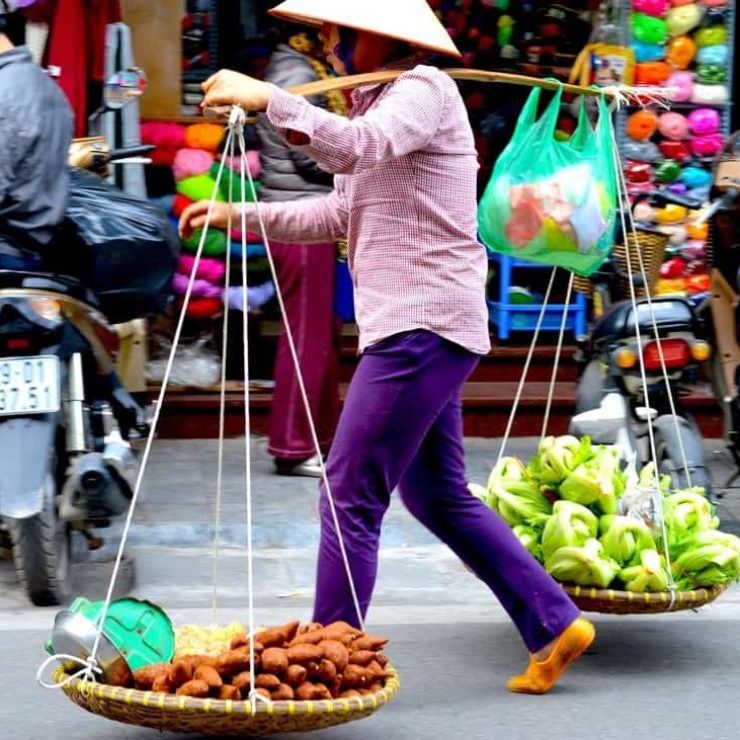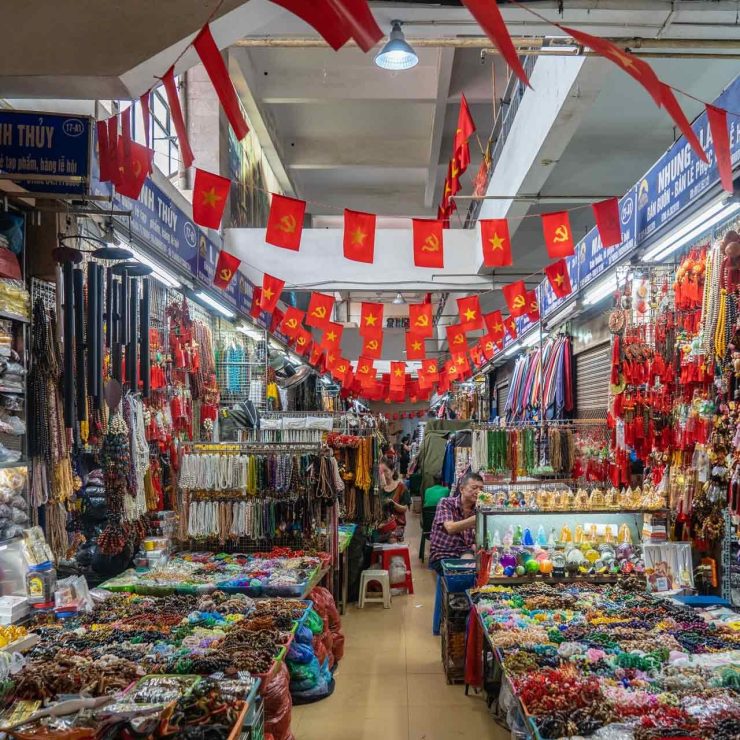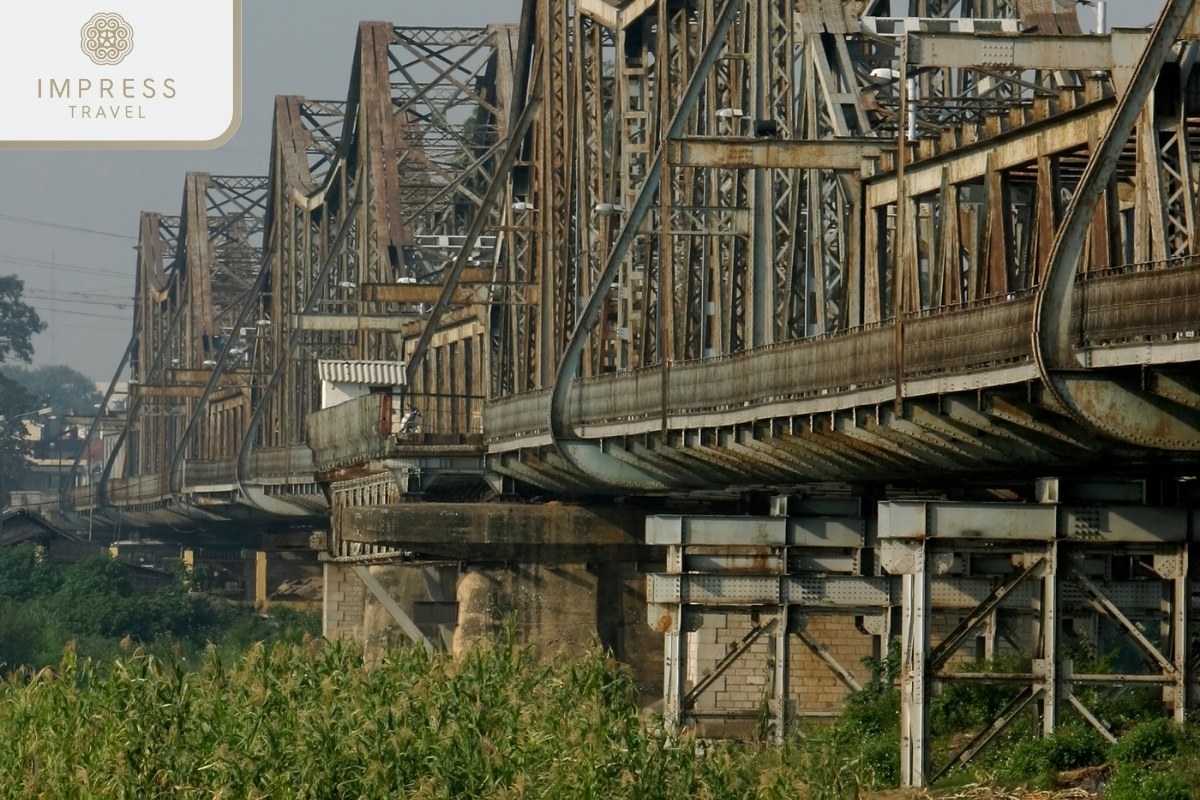
North of the hotel’s Ma May lane, Hanoi keeps its older economy alive: ドンスアン市場 — the city’s largest indoor market since 1889 — and the Long Bien Bridge, the 1902 railway-and-motorbike span that Hebrard’s engineers built across the Red River. Together they are the Old Quarter’s working-class counterpoint to the lantern lanes — and both sit within ten minutes of La Siesta Classic Ma May. 🏗️
🏬 Dong Xuan Market: The Three-Storey Engine
The market hall runs on wholesale logic — floor by floor, fabric to produce to household goods — with the surrounding streets extending the departments outward. The visitor’s version:
- The ground floor — fabrics, notions and the textile stalls; Hanoi’s tailoring supply chain in one hall (the tailoring contrast: the テーラーガイド).
- The upper floors — household wares, shoes, tea and dried goods; the souvenir-hunter’s non-tourist alternative (the crafted souvenirs live on Hàng Gai: the souvenir guide).
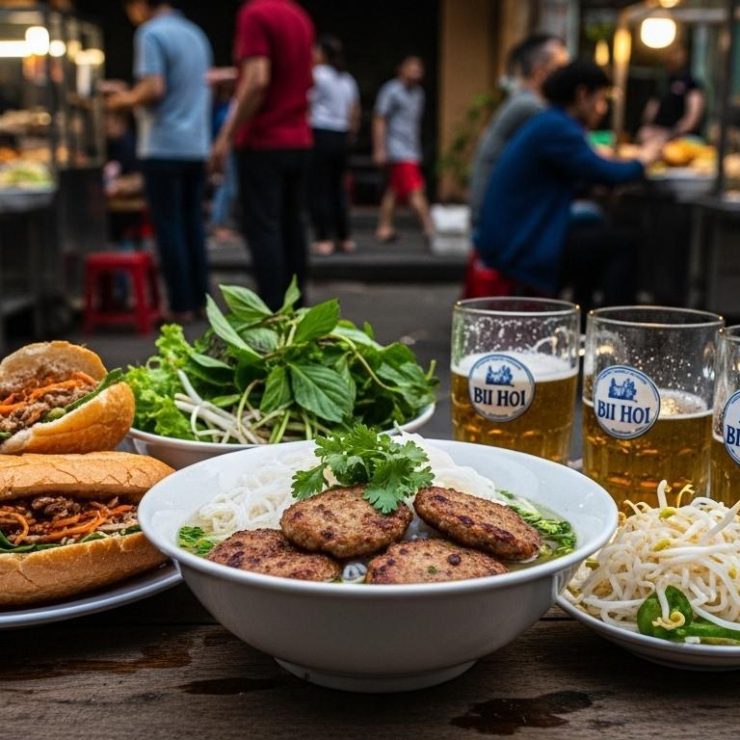
- The perimeter streets — the food stalls and the breakfast crowd; the market’s edges feed better than its aisles (the eating map: food guide).
- The timing — mornings are the market’s real hours; the wholesale pulse fades after lunch.
🌉 Long Bien Bridge: The Sunrise Walk
The bridge is Hanoi’s structural monument — steel trusses, a middle railway track, motorbikes threading the outer lanes, vendors selling corn and fruit on the walkways, and the river running red-brown beneath. The ritual worth setting an alarm for: walk the bridge at sunrise (or late afternoon), when the light turns the steel gold and the city’s day begins on the span. Pedestrians use the outer walkways; keep to them, mind the bikes, and photograph toward the West Lake side for the skyline contrast. The bridge’s history — designed with the Eiffel company’s involvement and finished in 1902 — belongs to the city’s industrial story arc (the heritage guide covers the layer).
🚶 The Morning Circuit from 94 Ma May
- 07:00 — breakfast first — a street bowl near the market (the phở guide).
- 07:30 — Dong Xuan halls — the market’s real hours; watch the wholesale floor breathe.
- 08:30 — walk north through the wholesale streets toward the river.
- 09:00 — Long Bien walkways — the bridge walk, the river view, the fruit vendors.
- 10:00 — return arc — through the lanes past the train street neighbourhood or straight back for the spa reset.
🛒 What to Actually Buy at Dong Xuan
- Tea and dried goods — the wholesale tea stalls sell the same leaves as the gift shops, minus the gift packaging (the gift version: the souvenir guide).
- Fabric — by the metre, for travellers with a tailor plan (the テーラーガイド explains the workflow).
- The market snacks — the perimeter stalls’ banh and fruit; eat there, not on the bridge.
🕰️ The Market’s History in One Paragraph
Dong Xuan (“Spring Market”) has anchored the Quarter’s commerce since 1889 — rebuilt after the 1994 fire inside its colonial steel-and-tin shell, with the clock tower watching the approaches. The wholesale floor’s rhythm — porters, trolleys, the bale-opening mornings — is the Old Quarter’s original economy still breathing, the same trades the street names remember (the street guide). Walk it as history first, shopping second, and the morning circuit makes sense (the souvenir map completes it). 🕰️
The market’s second floor is the tea-and-dried-goods floor — the wholesale benches where the city’s tea shops restock: lotus tea, jasmine green, the dried mushrooms and herbs of the northern provinces. Buy the loose-leaf by the hundred grams at wholesale prices, and ask the stall to double-bag the aroma; the tea travels home better than any boxed gift version.
❓ Frequently Asked Questions
How far is Dong Xuan Market from the hotel?
Ten minutes on foot north through the Old Quarter — the market’s streets connect to Ma May’s lanes directly.
Can tourists walk on Long Bien Bridge?
Yes — the outer walkways are pedestrian; stay clear of the railway track and mind the motorbike lanes; sunrise and late afternoon are the best hours.
Is Dong Xuan worth it for shopping?
For fabrics, tea and the non-tourist experience — absolutely; for crafted souvenirs, Hàng Gai’s shops win (the guide).
Is the area safe for solo travellers?
Yes — the market streets run busy all morning; the usual crowd sense applies (the insider guide).
🏗️ The Bottom Line
Dong Xuan and Long Bien are Hanoi’s working heritage — a market that has fed the city since 1889 and a bridge that still carries it across the river. Set one alarm, walk the circuit in the morning, and see the Old Quarter’s other half before the lantern lanes wake. 🌉